Categories
Uncategorized

FMCSA Briefing: Summary of Hours of Service Updates

On March 16, 2020, the Federal Motor Carrier Safety Administration (FMCSA) announced relaxed hours of service (HOS) restrictions on food items that are replenishing grocery stores, and for a variety of supplies and equipment directly supporting the COVID-19 relief efforts.

Per the briefing, HOS have currently been lifted for the transportation of the following items:

  • Medical supplies and equipment related to the testing, diagnosis, and treatment of COVID-19
  • Supplies and equipment, including masks, gloves, hand sanitizer, soap and disinfectants necessary for healthcare workers, patient and community safety, sanitation, and prevention of COVID-19 spread in communities
  • Food for emergency restocking of stores
  • Equipment, supplies, and persons necessary for the establishment and management of temporary housing and quarantine facilities related to COVID-19
  • Persons designated by federal, state, or local authorities for transport for medical, isolation, or quarantine purposes

Update (3/19/20): On March 18, 2020, the Administration expanded the HOS exemptions to cover motor carriers carrying paper products and other groceries, as well as materials needed for the manufacturing of medical supplies and other items. The rule exemptions still do not, however, cover routine commercial deliveries, according to the FMCSA.

Categories
Uncategorized

FMCSA Data Show the Trucking Industry is not Contracting and There is not a Driver Shortage

There’s a false narrative being shared that the trucking industry is contracting and there is a driver shortage. For that, we can thank partial research data that’s shared with investors, analysts, reporters, and economists that leaves out some pretty compelling economic movements afoot in trucking.

For the past eight years — since February 2012 — we have been analyzing data provided by the Federal Motor Carrier Safety Administration (FMCSA) and Qualified Carriers to garner industry trends and stay ahead of the curve for our customers. It is through careful analysis, that we can say with conviction that the narrative being shared today is not indicative of the trucking industry.

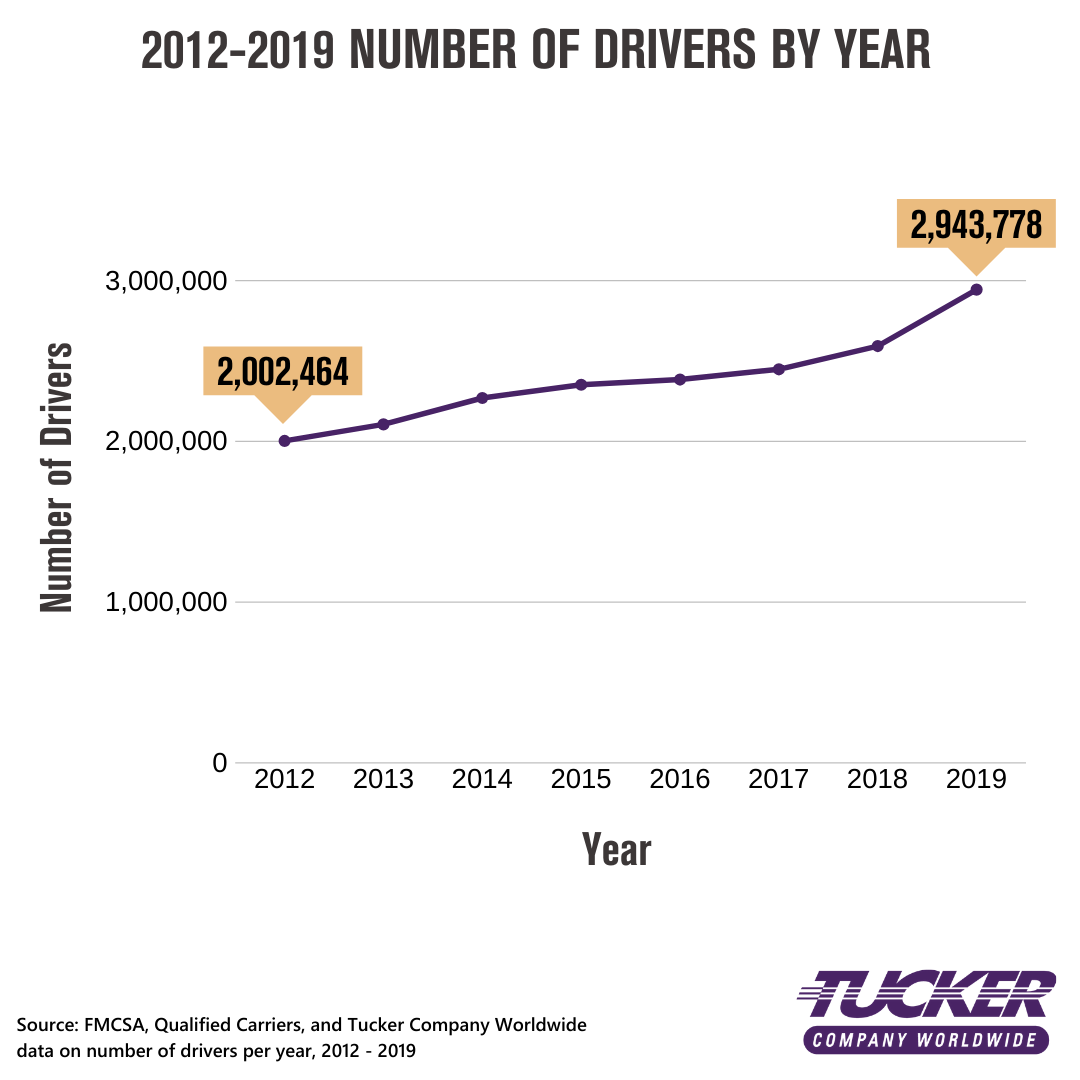
The industry is not contracting and there is not a driver shortage. In fact, the number of active for-hire trucking companies and the total number of drivers have been growing steadily, and at the end of 2019 both groupings exceeded those of December 2018.
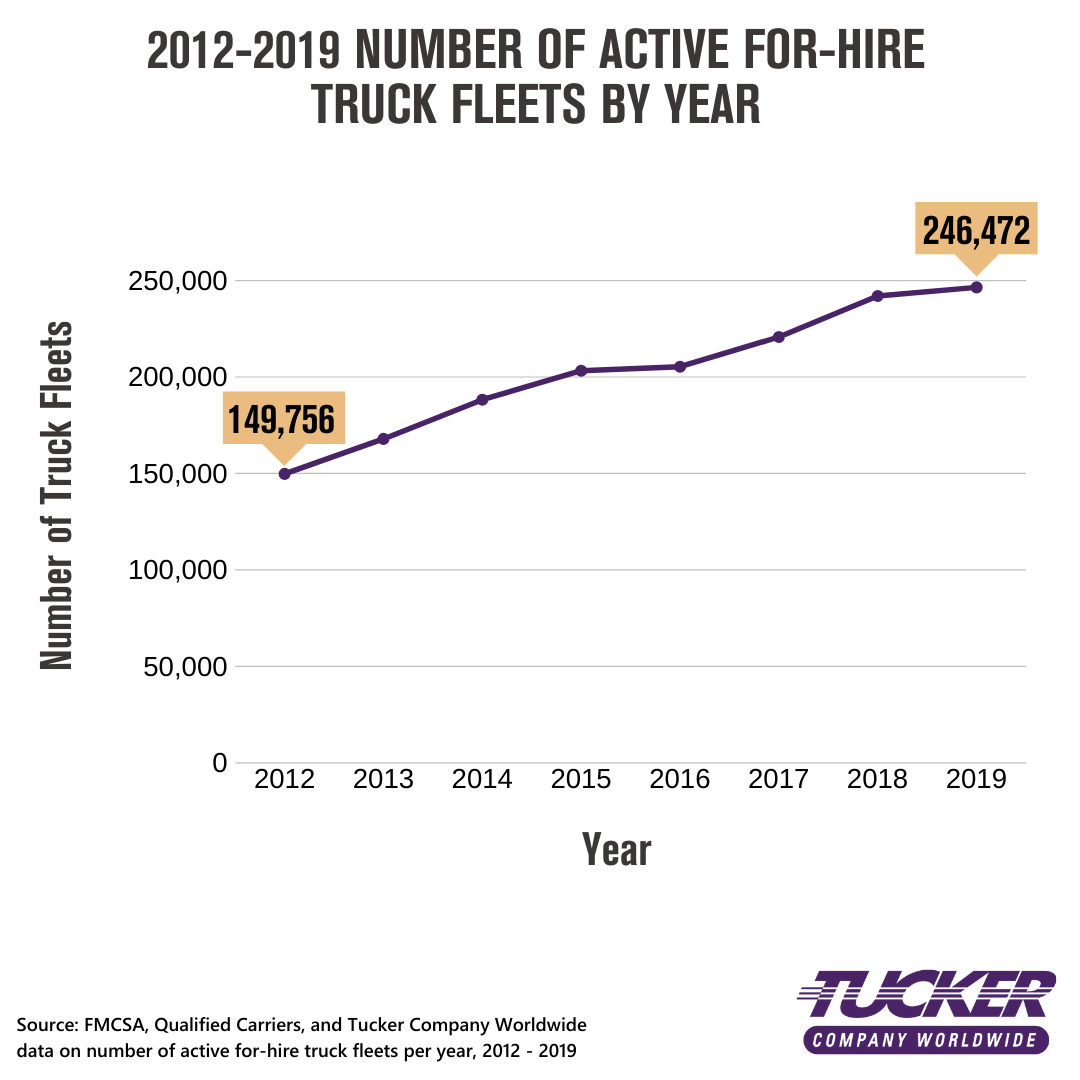
2012-2019 Number of Active For-Hire Truck Fleets By Year

2012-2019 Number of Drivers By Year

Overall, Truck Fleets grew by 1.9%

Year over year, we saw an additional 4,479 trucking companies, adding 1.9% overall and bringing the total number of active for-hire trucking companies to 246,472. But, fleets operating 501+ trucks saw a loss of 6 trucking companies, dropping from 390 to 384, for a loss of 1.5%.
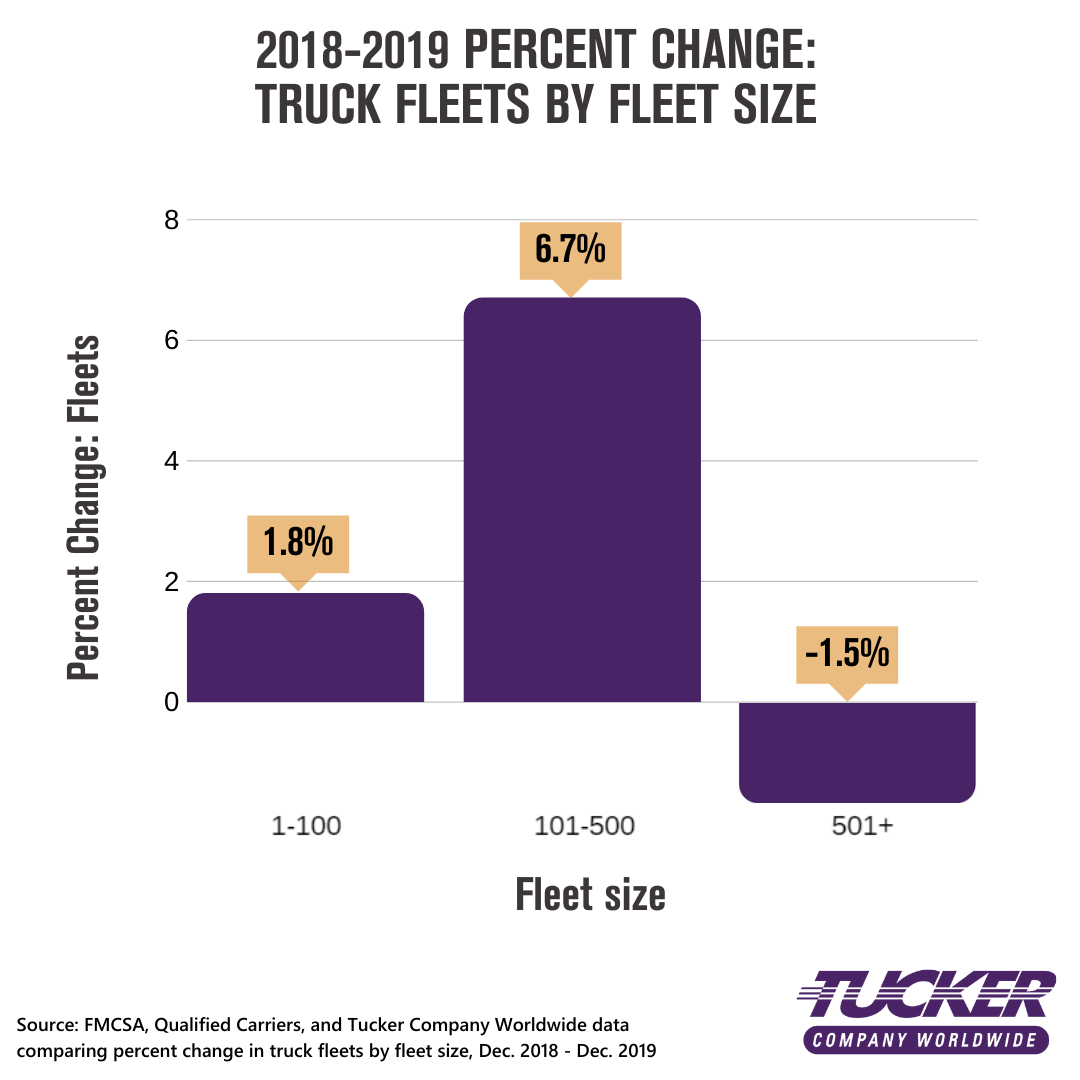
2018-2019 Percent Change Truck Fleets By Fleet Size

There is not a Driver Shortage

In addition to an increase in the number of fleets on the road, year over year, more than 354,000 drivers were added to the nation’s total truck driving population — bringing the total number of drivers who were driving for active for-hire carriers to 2,943,778 as of December 2019. That’s a 13.4% increase in the total number of American drivers.
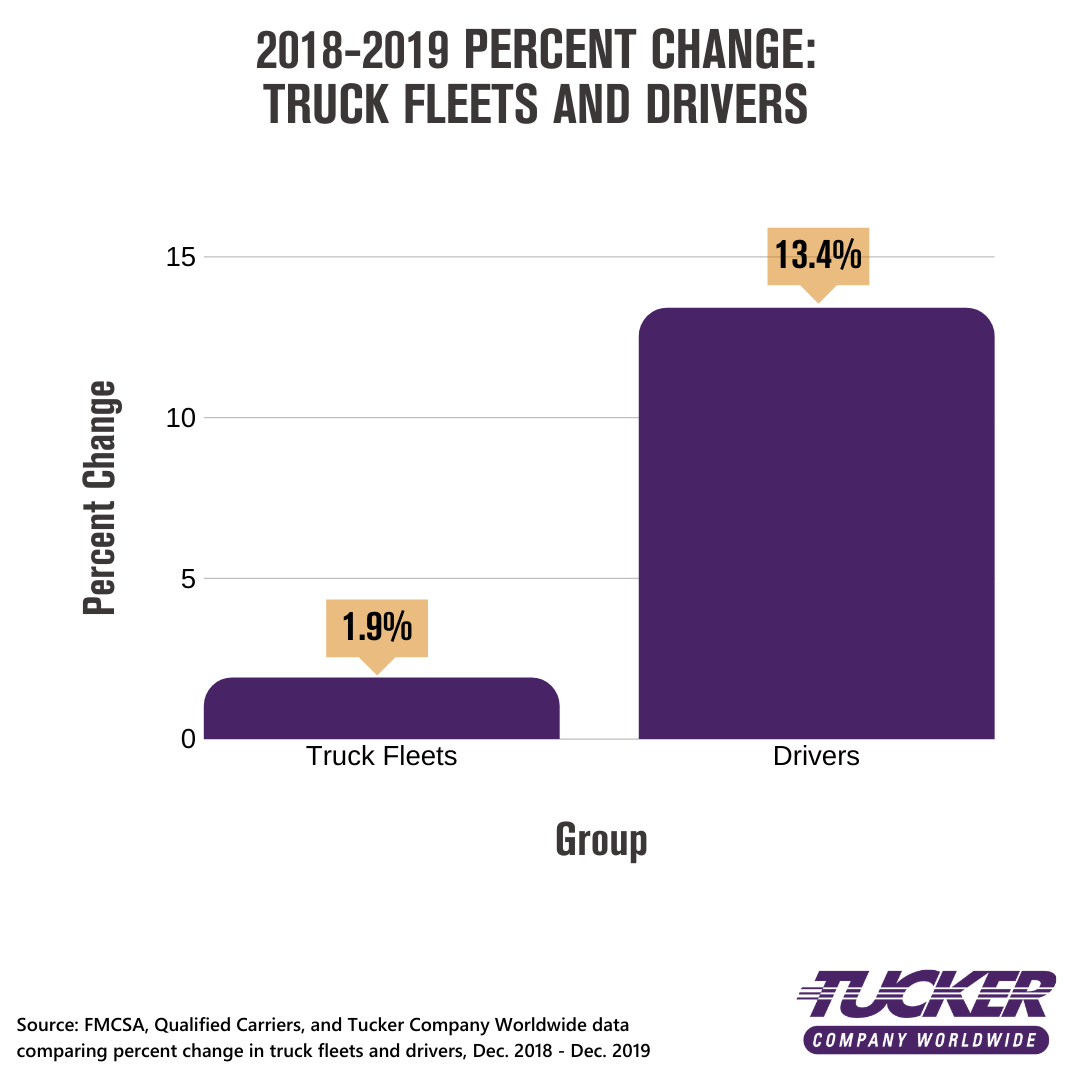
2018-2019 Percent Change Truck Fleets And Drivers

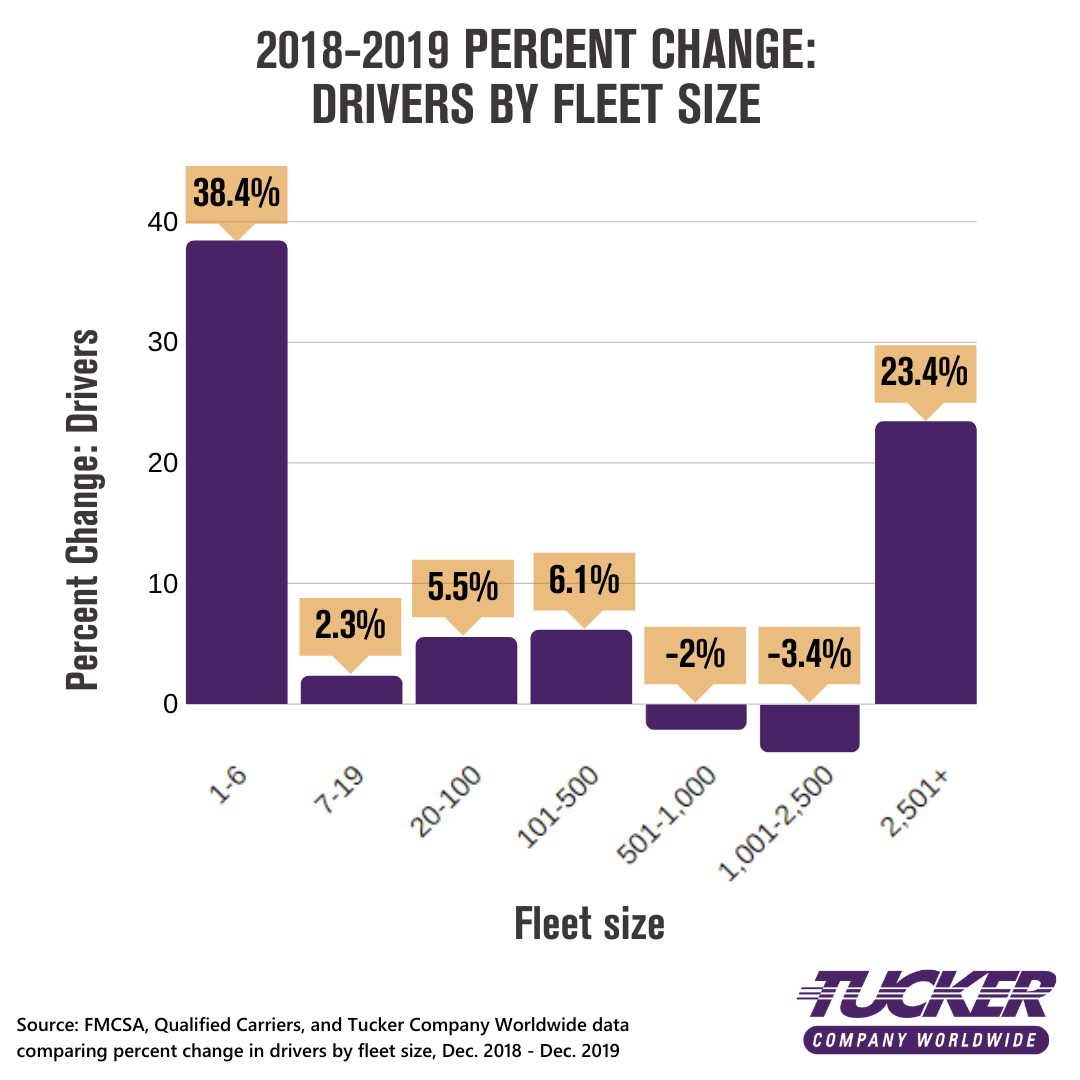
Interestingly, the largest fleets (501+ trucks per company) — which lost 1.5% of their capacity — added a whopping 133,705 net drivers to their fleets, bringing them to 1,100,757 drivers. Not to be outdone, small fleets (1-100 trucks per company) added even more — netting 191,524 drivers, bringing their total to 1,390,390 and bringing them up to 26% more capacity than the largest fleets. The smallest fleets continue to outpace their larger siblings, both in driver growth and total driver count.
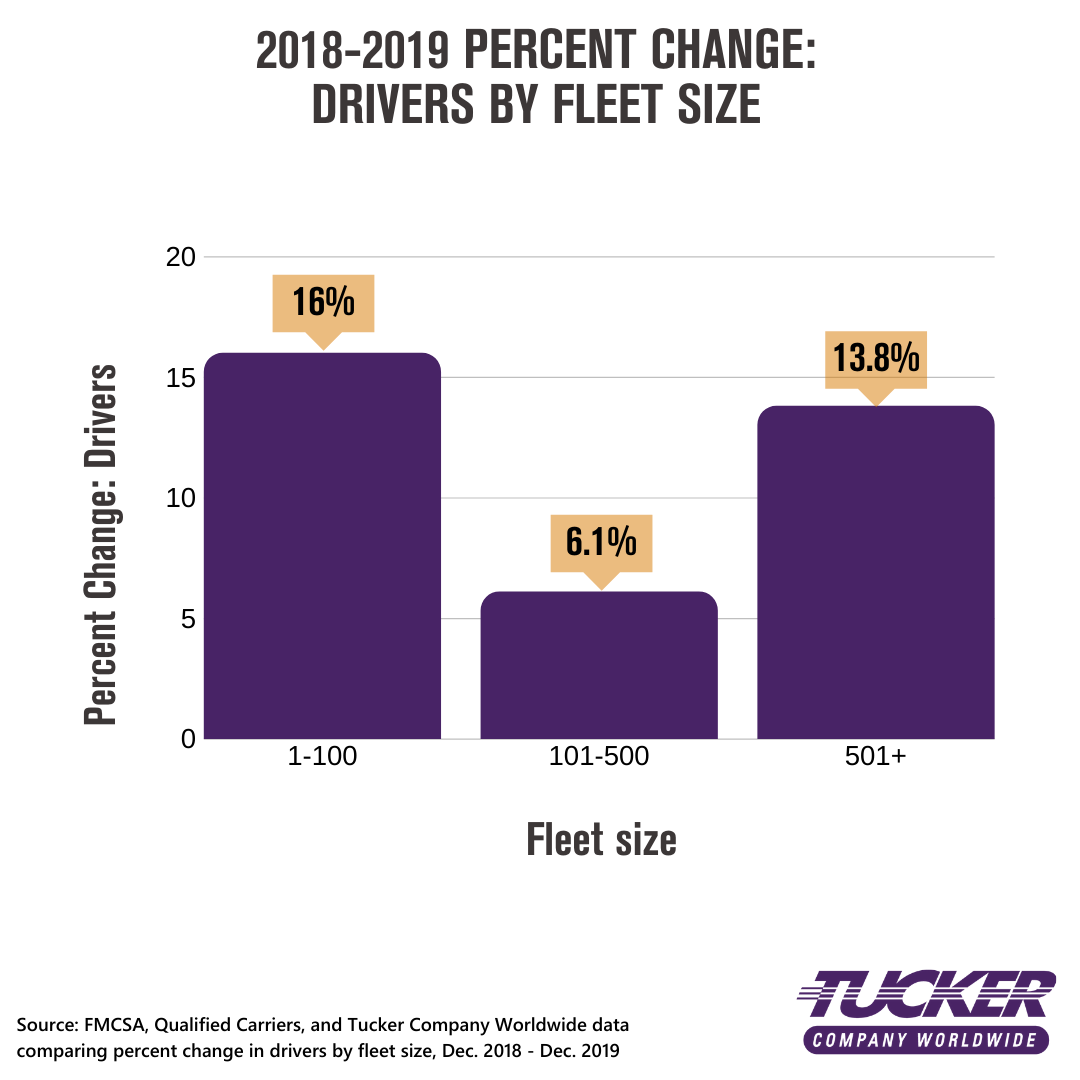
2018-2019 Percent Change: Drivers By Fleet Size

Something Interesting is Happening with the Largest Carriers

As mentioned above, fleets operating 501+ trucks, saw a loss of 6 trucking companies, dropping from 390 to 384, for a loss of 1.5%. Yet, they still added 133,705 net drivers to their fleets, bringing their total drivers to 1,100,757, for a 13.8% increase. A close inspection of this data shows something even more interesting.

Fleets with 501-1,000 trucks declined by 9 carriers, from 226 to 217, and lost 3,417 drivers, or a 2% decrease. The next group, 1,001-2,500 trucks declined by 3 carriers, from 106 to 103, and lost 6,357 drivers, for a 3.4% decrease. The winner? The biggest fleets, or those with 2,501+ trucks. They saw their population grow from 58 to 64 carriers, for a 10.3% increase, and driver count soared by 143,479 to 756,129, for a 23.4% increase. The big are getting bigger. And if rates stay low, and demand for trucking doesn’t rise, the biggest carriers may get even bigger, as independent drivers seek some shelter.

But the 143,479 growth that the largest carriers saw is still smaller than the net number of drivers that the 1-6 truck fleets added in the same period — 156,813. So, you can also say the small are also getting bigger.
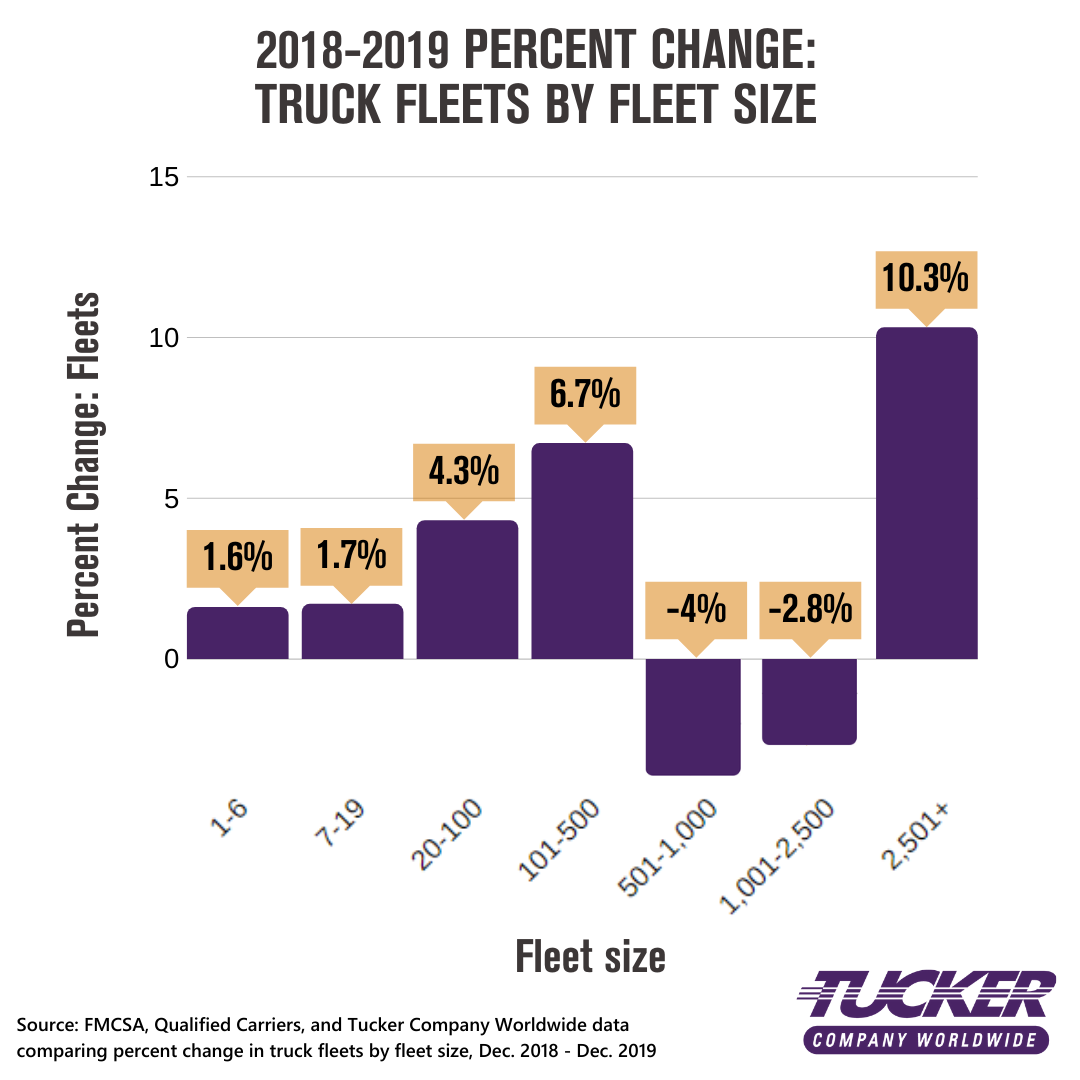
2018-2019 Percent Change: Truck Fleets By Fleet Size

2018-2019 Percent Change: Drivers By Fleet Size

In short, the trucking industry grew from December 2018-2019, contrary to what you may be hearing. We’ve got the data to prove it.


Categories
Uncategorized

4 Regulatory Issues Impacting Shippers Today

If you missed the 2020 NITL Summit, you missed critical briefings on dozens of regulatory, legislative, and commercial issues your company needs to navigate in 2020 and beyond. As chair of NITL’s Highway Transportation Committee, Tucker Company Worldwide CEO, Jeff Tucker, collaborates with committee members to make sure your best interests are being kept top-of-mind in Washington, DC.

Below are a few of the topics we’re focusing our efforts on right now:

1. Truck size and weight issues

Do you weigh out before you cube out? Studies show* that 6-axle trucks stop well within federally mandated stopping distances. In fact, the same federal study indicates that 90,000 pound six-axle trucks actually stop faster than standard 80,000-pound 5-axle trucks – offsetting safety concerns that have been raised. Through industry involvement, we are at the forefront of lobbying Congress to take this data into consideration, and allow increased weight limits with the addition of a sixth axle.

2. Clean Air Action Plan

In late 2019, the Ports of Los Angeles and Long Beach introduced their “Clean Air Action Plan,” which will have potential implications for shippers. In an effort to reach their goal of 100% zero-emissions trucks by 2035, the ports have proposed a fee of $10 per twenty-foot equivalent unit and $20 per forty-foot equivalent unit to pass through the terminal gate. The NITL Highway Transportation Committee was briefed on the full proposal, and will soon have the chance to comment.

3. Highway Trust Fund

The Highway Trust Fund is funded by the federal fuel task paid at the pump. As you can imagine, the fuel task has taken a hit with the introduction of electric and alternative fuel cars, and – in addition – some of the funds are being spent on items that don’t support the movement of people or goods. We’re keeping an eye on where cuts to spending are being proposed, and will advocate on behalf of our customers’ best interests where appropriate.

4. Truck driver hours of service (HOS) updates

The Federal Motor Carrier Safety Administration (FMCSA) is mulling subtle, but significant changes to several elements of U.S. trucking HOS – including changes to 30-minute rest break rules and the number of consecutive hours in the sleeper berth. Through our involvement with various industry organizations, such as TIA and NITL, we are continually briefed on how these rules may impact shipper transit time, and participated in providing feedback to the U.S. Department of Transportation on the proposed changes. It is our opinion that the changes could increase driver flexibility without harming highway safety, and may have a significant impact on shipper supply chains.

As always, we will continue to keep our customers top-of-mind in all that we do. Are you interested in learning more about our industry involvement? Do you have a lane or project we can help you with? Contact us today.


*Source: Comprehensive Truck Size and Weight Limits Study – Highway Safety and Truck Crash Comparative Analysis Technical Report

Categories
Uncategorized

Company Highlights From 2019

From weighing in on market trends to “playing it cool” with industry friends, we had a lot of fun this year! Check out what we were up to.

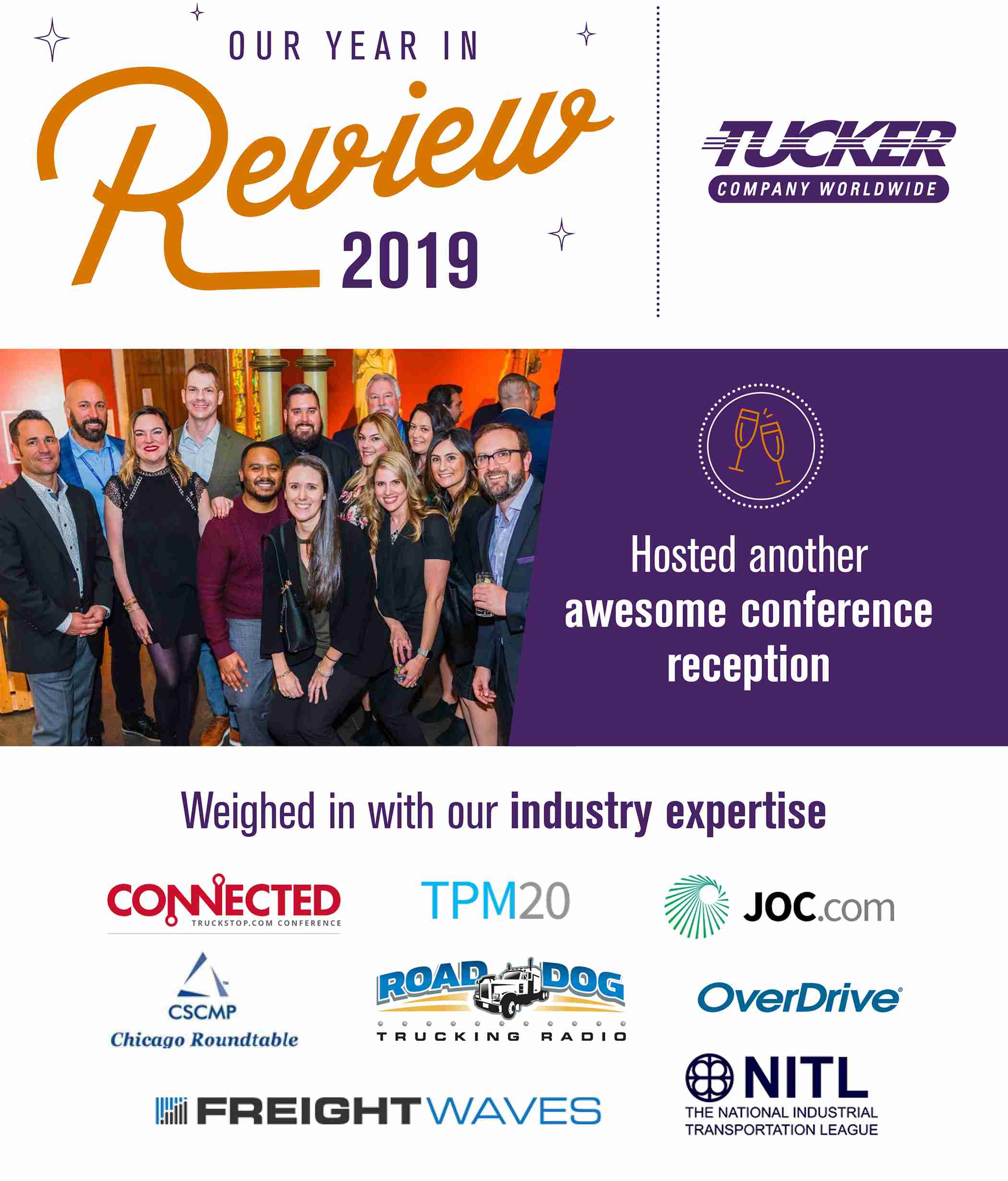
Our year in review 2019 graphicJoyous moments from 2019Review graphic from our partnersThank you for helping us make 2019 a year to remember

Categories
Uncategorized

Freight Visibility Update

This week, we celebrated an internal milestone by hitting our first quarter visibility goal — the first target we identified for ourselves on our quest for 100% visibility by the end of 2019.

To understand why we took on this initiative, we’ve got to throw it back to 2018 — a year most people stationed in the transportation departments of large shippers would like to forget. It was a budget-busting year for most, due in large part to the way contracted business fell to the spot market.

However, there was another factor that played a huge role: compliance fees imposed by major retailers. If you deliver into any big box retailer, chances are you are intimately familiar with these fees. As retailers fight to maintain their market share, they are laser-focused on what we refer to as #supplychaingoals — no stock-outs, but no backroom inventory, either. Supply and demand precision. And that means they want all of their orders on time and in full, or they’ll be knocking at your door with the bill.

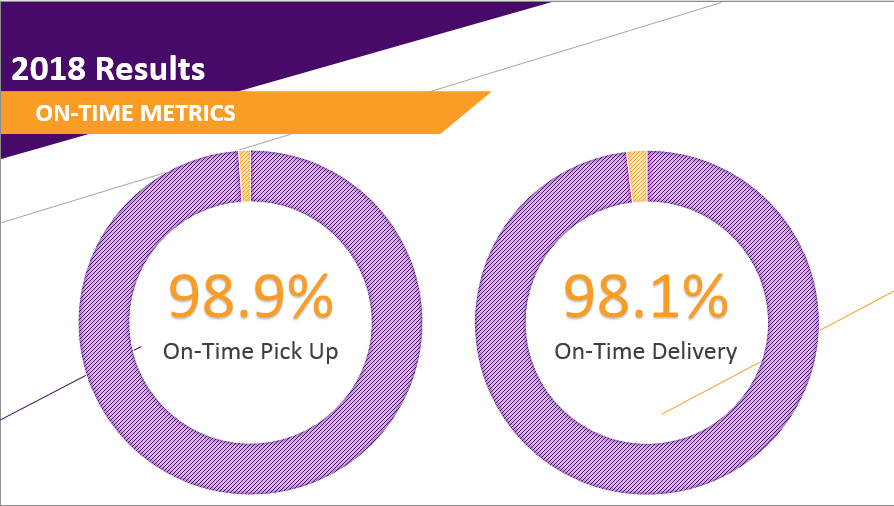
To maintain their bottom line, shippers are realizing the need for transportation providers that deliver on time. At Tucker, we’re thrilled! We’ve always prided ourselves on providing top-notch service. Our track and trace procedures are second to none and our on-time metrics speak for themselves:

On-time metrics for 2018

However, we realize that we need to take it one step further to improve our shippers’ supply chain efficiency. To that end, we announced our freight visibility initiative late last year, ensuring that every shipment we book has real-time location visibility 24/7/365.

This type of connection (whether by ELD, TMS or app tracking) provides valuable reporting data right at your fingertips. It also opens up the doors for us to spend more time mining your shipment history to provide cost-saving recommendations and presenting opportunities for increased efficiency — a real value-add for our customers.

As a non-asset-based 3PL with carrier connections spanning the past 58 years, 100% visibility is no easy task — but we’re firm believers that it’s worth doing. Our internal cross-departmental committee is vetting technology partners, identifying non-compliant carriers, troubleshooting tracking connections, and designing a seamless customer experience, to make this important initiative a reality. Each month we announce our progress internally and reinforce the new procedures we’re implementing. We’ve made this quote our electronic visibility mantra: “We don’t grow when things are easy. We grow when we face challenges.” We’re excited to face this challenge, grow our base of shippers, and pioneer a new level of transportation service — once again!

Learn more about our commitment to digital, GPS-based truckload visibility.

Categories
Uncategorized

Technology, Big Data, A Fragmented Trucking Industry and New Demands for Perfection

By: Jeff Tucker, CEO, Tucker Company Worldwide

Transportation in 2018 was a year of continued upheaval. To those of us who feel the trucking market is a living and breathing entity, it validated that, and we are beginning to be able to identify some of the predictable conditions that are recurring. We witnessed the ongoing migration of drivers joining smaller fleets or becoming owner-operators at a pace of more than 2-1 (100 trucks or less gained 366,311 drivers since 2012, while fleets with 501+ have only snagged 176,058). That trend has contributed to the biggest carriers’ inability to add capacity. Simultaneously, the biggest shippers’ strategy of using brokers only as a backup to their asset-based providers, in the so-called “waterfall” swelled the spot market to a peak this past summer. The results? High prices, late shipments, and blown budgets, to name a few. These market inefficiencies, combined with slow-to-react transportation buyers caused an abnormally large spot market which was a mirage, destined to fade.

So what are we seeing so far in 2019? Data from Truckstop.com, SONAR and DAT all point to a softening in the spot market during the last half of 2018, and the first quarter has felt pretty normal. There are many possible contributing factors. Has the market overcorrected, like markets often do? Did the addition of over 611,000 drivers to the for-hire fleets, bringing the number to over 2.5 million drivers, change the capacity equation? Has tariff uncertainty halted trade enough to let the steam out of the market? Wall Street’s feeling the uncertainty – we saw all of 2018’s gains reversed by Thanksgiving, with experts citing concern for global and U.S. growth, led by tech declines. Any one of these factors is enough to prick the capacity shortage bubble, and restore pricing power, at least temporarily, to buyers.

What is certain is that the industry is evolving faster than it ever has before. Exorbitant (and often foolish) investment in transportation technology and startups is spurring new ideas, which are often “borrowed” as quickly as they’re learned and incorporated into existing businesses and software. “Digitalized” freight is the latest buzz phrase, which will start to come together as technology providers consolidate.

The most significant new pressure driving change in the industry, in my opinion, is the e-commerce and traditional retailers who have quietly, and substantively, rewritten the industry’s playbook overnight.  The various compliance fee regimes imposed by most major retailers, grocery and drugstore chains (sometimes referred to as “OTIF” or on-time and in full) have turned trucking into a precision sport, with massive financial consequences to the product manufacturers. With their bottom line at stake, manufacturers are turning the screws on their transport operators—which isn’t the answer. America is a consumer-based economy. Retail is the largest segment of our economy. Between 2017 and 2018, retail changed trucking, probably forever. Pricing models simply haven’t caught up yet.

Technologies that enhance the customer experience are always front of mind. But in order to succeed in 2019 and beyond, the transportation industry will rely more on services that improve on-time pickups and on-time deliveries, and provide visibility into all shipments to better coordinate with retailers. With profit margins on the line for manufacturers, the old procurement line at bid time, “we assume all service is equal” is Stone Age talk.  Service matters more than ever before – and certainly not all providers are equal! Those transportation providers that can harmonize service, capacity, and technology, will lower costs and achieve results for their shippers.

Attend any transportation tech event, and you’ll hear “digitalizing” the supply chain and “democratization” of big data 86 times before lunch (and has anyone else noticed that they’ve stopped talking about how 3D printing will change transportation?). Attend tech expos, and you can expect to see 101 of the coolest ideas you wish you had in your TMS—from 101 different providers. However, you can’t leave a fully functioning, thorough TMS because one provider has a really cool trick in one small area, and a totally inadequate TMS otherwise. Nobody’s put it all together. It’s impossible right now. ELDs were the watershed moment in trucking. However, there are many ELD providers — and some are easier than others to extract usable data to increase efficiency in the supply chain. Certain carriers will share their data with you — but inevitably, some won’t. And there are those that simply can’t. Shipper Transportation Management Systems (TMSs) are usually extensively customized for the specific shipper, with different inputs, outputs, and objectives, even if many shippers use the same provider.

There’s a long road ahead for the industry to reach the utopian digitalized supply chain. I believe the first step forward will entail a consolidation of tech companies, to begin to streamline and organize the data, the fields, the sharing, and the platform. We need to see consolidation of ELD providers, and/or better availability of that data. Blockchain can help here, but even that’s further in the future than many think. Our company, like many sophisticated providers, has dozens, even hundreds, of customer-specific tech customizations programmed in our TMS. Our service procedures are specialized to each individual customer, based on each customer’s specific business needs. We predict that we’ll see an even higher degree of customer specificity than ever, and the tech plays an integral role.

In order to succeed in this new landscape, you’ll need to incorporate emerging technology into your budget. One of the biggest challenges you’ll face is prioritizing where to spend tech dollars in order to get the most bang for your buck. Make systematic, small changes that pay dividends. This pace of change may be uncomfortable, but there will be clear winners and losers that come out of the next few years.

Learn more about our commitment to digital, gps-based truckload visibility.

Categories
Uncategorized

State of Transportation: FMCSA Data Insights

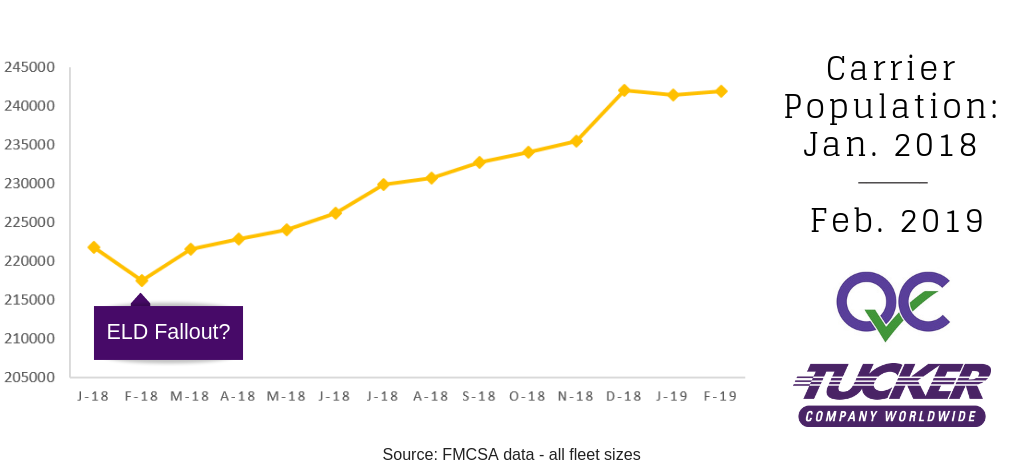
2018 was a wild ride. We experienced the implementation of ELDs, the introduction of strict compliance fees from retailers, and an influx of well-meaning but disconnected technology. Despite the market conditions (or as a result of them), the number of carriers continued to grow throughout 2018.

carrier population from january 2018 to february 2019

The data shows a dip right around February. If you remember, although ELDs went into effect in December, they were not fully enforced until April 1st. We suspect that the decline may reflect a number of carriers that decided to get out of the business rather than comply.

Regardless, as peak season reared its head, March saw a return to January’s numbers, and only increased from there. As the year went on, and the spot market increased, so did the number of carriers in operation.

To put it into perspective, 14,674 carriers entered the marketplace in 2018, versus 12,232 the year prior. In a year where headlines screamed consolidation, driver shortages, and carrier attrition due to the implementation of ELDs, a 20% increase in the carrier pool is certainly at odds with the popular narratives.

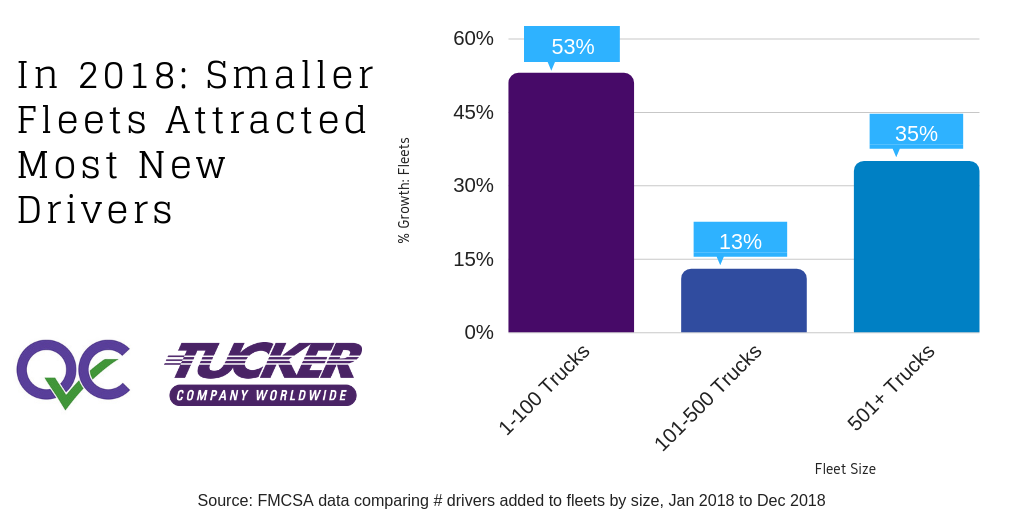
The freight industry also added over 107,000 drivers in 2018. Here’s a snapshot of where they filtered into the carrier pool:

In 2018 smaller fleets attracted most new drivers

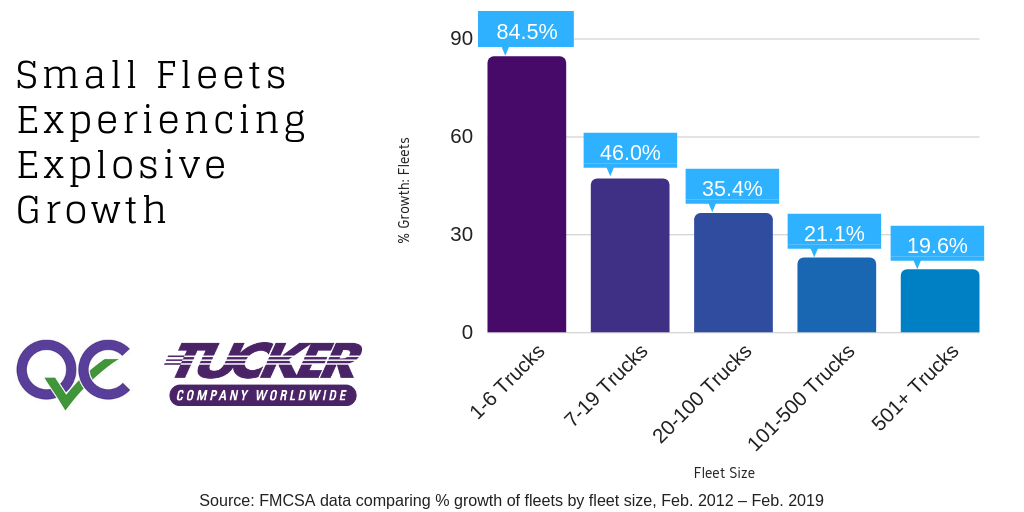
With January and February’s numbers incorporated, here’s an updated snapshot of how each fleet size has grown since 2012:

Small fleets experiencing explosive growth

The first quarter of 2019 saw much less freight falling to the spot market, and the carrier population showed a small decline. Is this a blip on the radar, or is the carrier data signaling an inflection point? With more drivers striking out on their own last year, only time will tell if they can find enough freight to be successful. The technological tools that were introduced into the marketplace should certainly help them understand market trends, connect with shippers, and price effectively.

As a freight broker, we continue to monitor these trends in the freight market to better serve and educate our customers.

Categories
Uncategorized

2018: Year In Review

As the year comes to a close we’re reflecting on all we’ve achieved in 2018. We’re constantly striving to improve in every area of logistics planning, execution and reporting, which is why we took the opportunity this year to highlight our commitment to quality, customer satisfaction, technology and philanthropy.

Technology
#1 Initiative: 100% Freight Visibility

The pace of the freight world is moving faster than ever and we’re committed to providing our clients with real time location visibility 24/7/365 to improve supply chain efficiency. To that end, we’ve added several technology partners to provide our carriers with different options to connect their movements to our TMS, and we’ve committed ensuring every single shipment we book is electronically traceable as of January 1st, 2020.

We believe our tracking mandate will help our shippers manage their supply chain more seamlessly, allow for more effective communication, present opportunities to pinpoint efficiencies & cost savings, and identify problems proactively – so we can all focus our attention on moving more freight together!

Philanthropy

We are proud to use our resources in a way that makes a significant impact in our industry and our community. As of 12/18/18, the Tucker team has raised over $9,070 for different causes through initiatives like our Jeans for Charity program, our dunk tank tailgate fundraiser, and our holiday Change Wars competition that recently benefited a For Pete’s Sake Cancer Respite Foundation adopted family. Learn more about our community impact initiatives here.

Quality

ISO-certification: Part of Tucker’s differentiation in the transportation market has always been our focus on excellence. And whether it’s in our industry, or within our company or service offerings, we feel that nothing worth doing is easy. In late 2007, we put our company through an expensive and rigorous 9-month training program to become certified to the international quality Standard known as ISO 9001, a disciplined quality management system designed to ensure that companies consistently meet and exceed the needs of customers and other stakeholders. Tucker has been ISO 9001 certified continuously since 2008.

Global Trade Magazine Leading 3PL: Tucker Company Worldwide was thrilled to be chosen as one of Global Trade Magazine’s Leading 3PLs –an annual list that honors 100 of the best, biggest and brightest 3PLs based on a year’s worth of study that includes industry reputation, innovation and exceptional operational excellence. This is our 6th year being recognized by this national publication.

Inbound Logistics Top 100 3PL: For the past 16 years, Tucker Company Worldwide has earned a spot on Inbound Logistics Top 100 3PL list, recognizing third-party logistics providers offering innovative, flexible, and reliable solutions to meet shipper demands. We’re proud to be recognized as the “best of the best” by Inbound Logistics’ editorial team.

Learn more about our commitment to quality & service

Customer Satisfaction

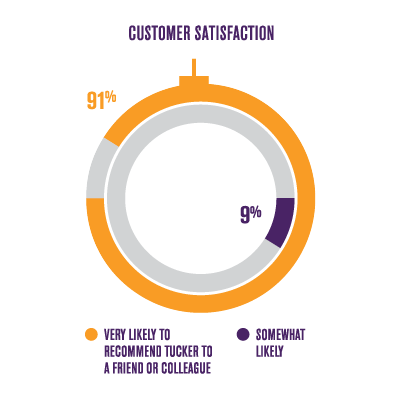
At Tucker Company Worldwide, we’re always striving to improve, and a big part of that is collecting and reviewing customer feedback. This past year we deployed customer satisfaction surveys periodically to find out what we’re doing right and what we need to work on.  The results were enlightening and encouraging. We were most proud that 91% of respondents consider our staff (knowledge, helpfulness, professionalism) to be above average or better, and 91% are “very likely” to recommend Tucker’s services to a friend or colleague.

The feedback we collected also emboldened us to launch our Freight Visibility Initiative to provide real-time data to all our shippers on a realistic timeline. In 2019 we’ll continue to reach out to our shippers and carriers to help ensure we’re providing the top-notch service and partnership they’ve come to expect.

We couldn’t do it without you.

At this time of year, it’s great to take stock of how far we’ve come, but we’d be remiss if we didn’t recognize and celebrate the enormous role that our clients, carriers, vendors and partners play in our continued business success. 

100% of the people who work here are grateful for the partnerships we have and the relationships we’ve cultivated.

Thank you, we can’t wait to see where 2019 takes us!

From Your Friends at Tucker Company Worldwide